Cedar Trees
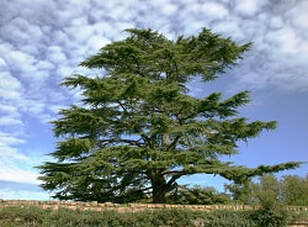
There are many types of cedar but the one most often found in the UK is cedrus libani, a magnificent conifer originating from the Lebanon and parts of Asia. As an evergreen, a majestic cedar makes a wonderful specimen tree in a large garden or estate and is often found in parks. You’ll frequently find cedars in the gardens of historic stately homes where they were planted two to three hundred years ago.
In Lebanon the wood of the tree is used as an insect repellent and the bark is often attractive to dogs, who love to chew it. Cedar can be recognised by its distinct shape. When mature it grows to over 100 feet and has dark coloured ridged bark with cracks. It has more than one trunk and branches form horizontal layers, as in the photo shown here. The needles of this conifer are arranged in spirals around side shoots and have transparent tips. The green cones grow singly and upright; developing from female flowers; they take around a year to mature after pollination, turning from green to purplish grey and then brown when they finally mature at about 3-5 inches in length. Cones production is often biennial and their purpose is to release pollen. The wood of cedar is hard and fragrant due to its natural oils and the tree is relatively fast-growing. Although fairly trouble-free, cedars, like many other trees, are prone to honey fungus and may be infested by insects. But watch out for pesky dogs and rodents that enjoy chewing the bark and may cause damage to your cedars. Ancient cedars have been known to survive for up to 800 years and often become hollow, creating a sheltered habitat for small animals. Their long lifespan is probably due to the hardiness of the cedar tree, which can tolerate extreme temperatures and biting winds, as many are native to the Himalayas. Call us on 0121 752 2784 for help with all your trees, including cedar |

|